Physiotherapy
Straight Leg Raise
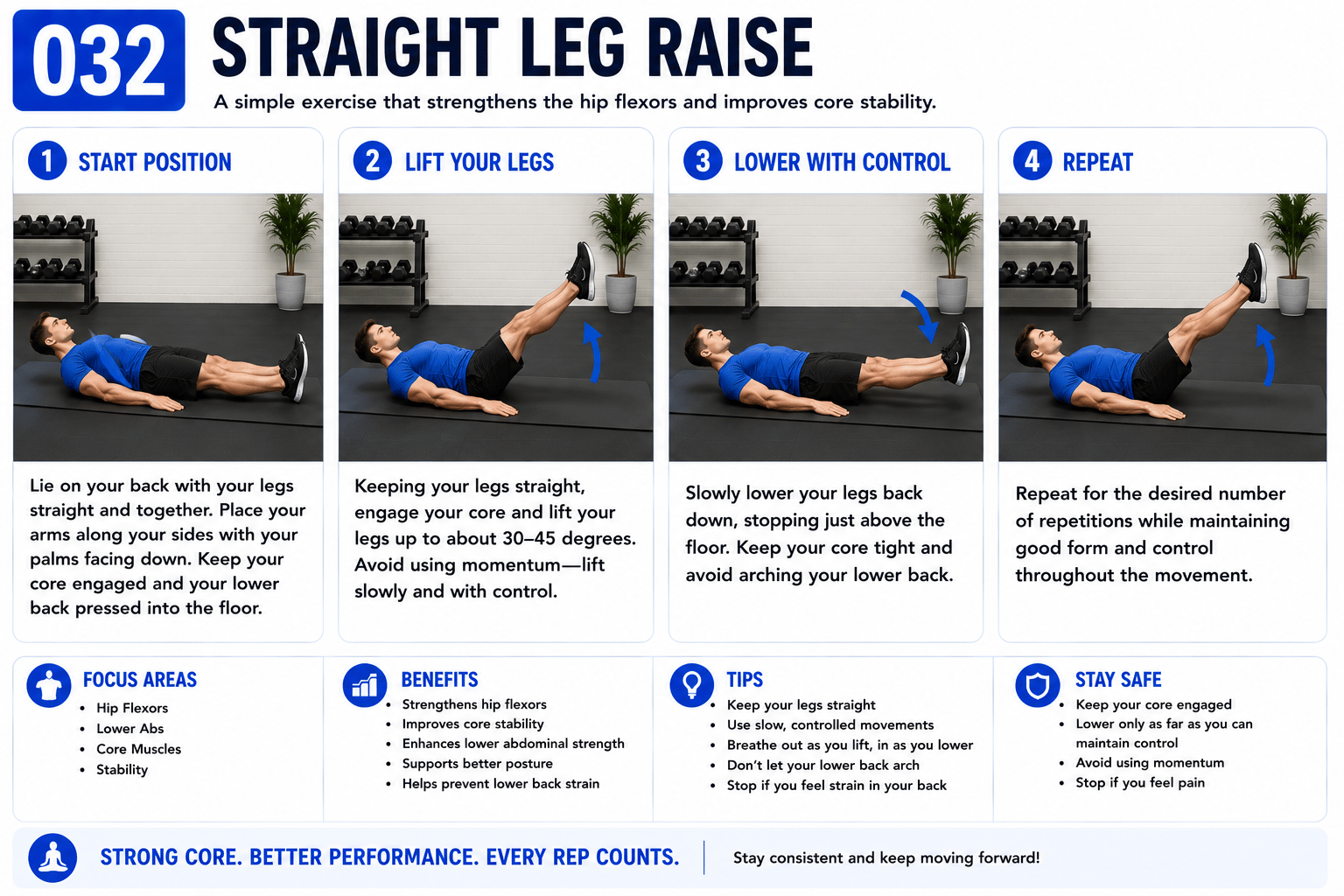
A controlled lying leg lift that asks the thigh and hip flexors to work while the knee stays straight. It is a low-load, rehab-style drill often used to practice quad control.
Media metadata
Provider: Alblooshi Fit atlas photo guide
Thumbnail: Photo guide
Reviewed video attachments can be managed from the admin panel. Alblooshi Fit does not scrape or re-host copyrighted exercise videos.
Suggested use
Sets
3
Reps
8-12 per side
Rest
30s
Muscles worked
Primary
Secondary
Equipment
How to do it
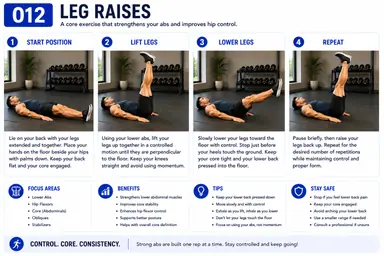
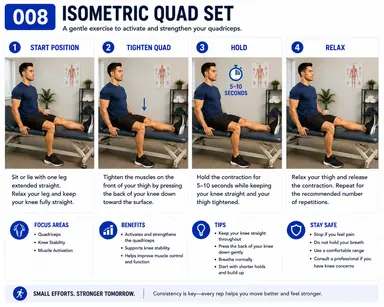
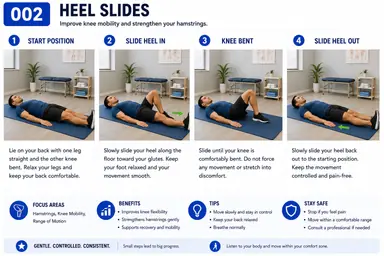
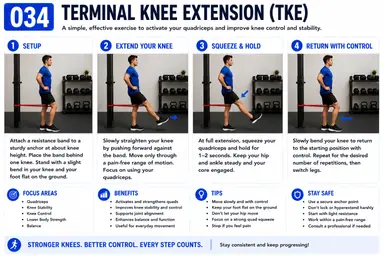
- Lie on your back with one leg straight and the other knee bent for support.
- Gently brace your core and press the straight knee long without locking aggressively.
- Lift the straight leg slowly to a comfortable height, usually around 30-45 degrees.
- Keep the knee straight and the movement smooth, with no swinging.
- Lower the leg back down with control before the back arches or the hip pinches.
- Complete the set on one side, then switch legs.
Common mistakes
- Using momentum to kick the leg up.
- Letting the knee bend as the leg lifts.
- Arching the lower back to chase more height.
- Moving into sharp hip, knee or back pain.
Safety first
- Keep the lift small and controlled; height is less important than a steady knee and comfortable back.
- Stop if you feel sharp pain, increasing knee swelling, tingling or sudden weakness.
- This animation is educational only and is not medical treatment. Consult a licensed clinician for injury-specific guidance.
Who should avoid or modify
- Recent hip, knee, abdominal or back surgery - follow your clinician's protocol before starting.
- Sharp pain, sudden weakness, numbness, tingling, or increasing swelling during the movement.
- Lower-back pain that worsens when the leg lifts - choose a smaller range and seek qualified guidance if it persists.
Not medical advice
Rehab-style movements are general wellness exercises, not treatment. If you are recovering from an injury or surgery, are pregnant, or manage a chronic condition, consult a licensed clinician (physiotherapist or doctor) before performing them. Alblooshi Fit does not diagnose, treat, or cure any condition.
Stop immediately and seek medical help if you feel
- Sharp or stabbing pain (not normal muscle burn)
- Chest pain, pressure, or palpitations
- Dizziness, light-headedness, or fainting
- Numbness, tingling, or sudden weakness
- Severe shortness of breath
Breathing and tempo
Breathing: Exhale as you lift, inhale as you lower.
Tempo: 2-1-3 - lift slowly, pause briefly, lower with control.