Physiotherapy
Ankle Pumps
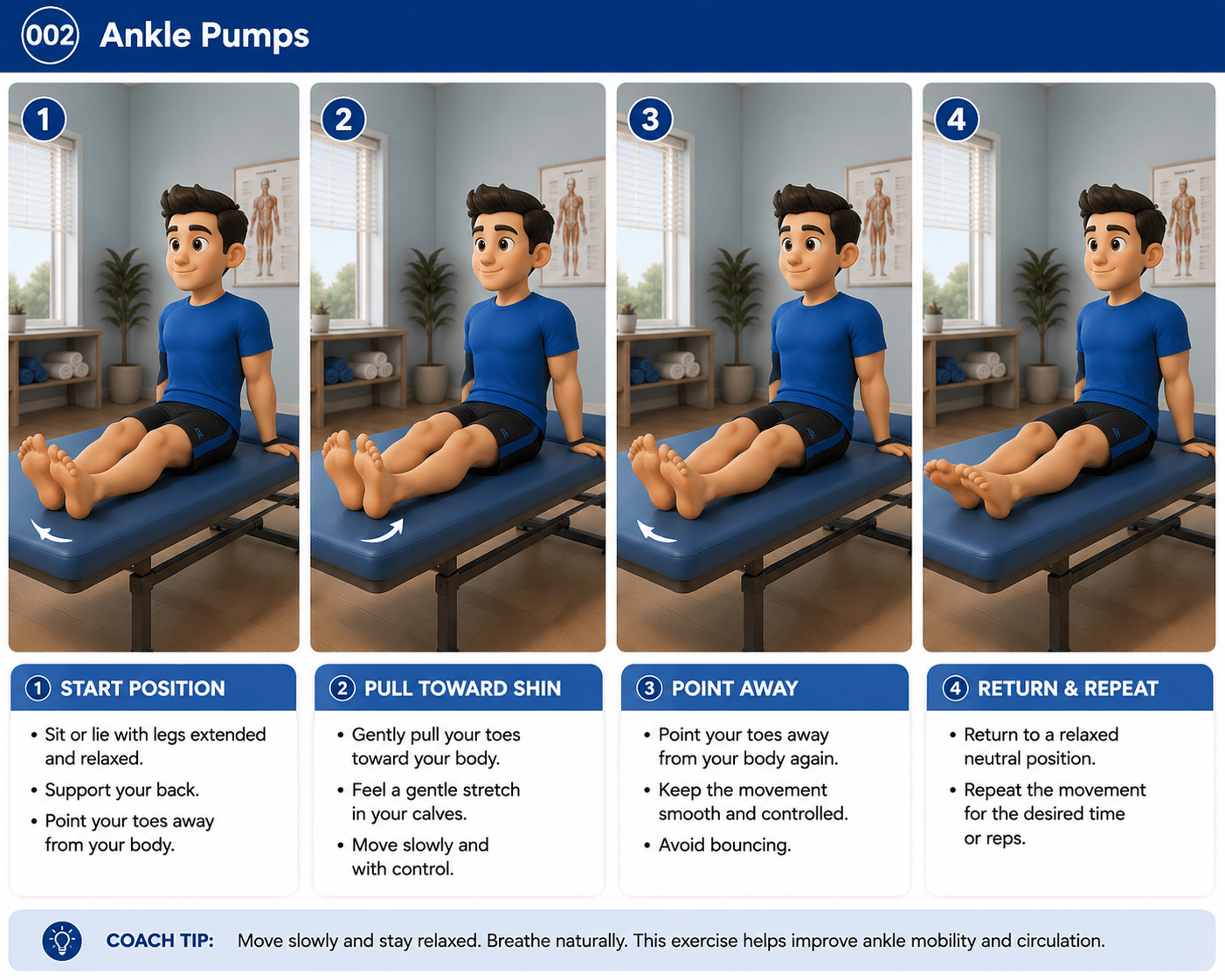
Gentle up-and-down ankle movements performed lying or seated. Commonly used to keep the lower leg moving and comfortable during periods of reduced activity, and as an easy first step back into ankle work.
Media metadata
Provider: Alblooshi Fit atlas photo guide
Thumbnail: Photo guide
Reviewed video attachments can be managed from the admin panel. Alblooshi Fit does not scrape or re-host copyrighted exercise videos.
Suggested use
Sets
3
Reps
15-20
Rest
30s
Muscles worked
Primary
Secondary
Equipment
No equipment needed - just your body.
How to do it
- Sit or lie comfortably with your legs extended and heels supported.
- Point your toes away from you as far as is comfortable, like pressing a gas pedal.
- Then pull your toes back toward your shins as far as is comfortable.
- Move slowly through the full comfortable range in both directions.
- Continue pumping rhythmically for the full set.
- Perform both ankles together or one at a time.
Common mistakes
- Tiny, token movements — use the full comfortable range in both directions.
- Moving so fast the motion becomes a flutter rather than a pump.
- Tensing the whole leg instead of letting the ankle do the work.
Safety first
- Keep the motion smooth and pain-free; this is meant to feel easy.
- These are often suggested during recovery periods — if you are post-surgery or on bed rest, consult a licensed clinician about how often to do them.
- New calf pain, swelling or warmth is a reason to stop and seek medical advice promptly.
Who should avoid or modify
- Signs that could suggest a blood clot — calf swelling, warmth, tenderness or discoloration — need prompt medical attention before exercising the leg.
- Unstable ankle or foot fracture without clearance from a licensed clinician.
Not medical advice
Rehab-style movements are general wellness exercises, not treatment. If you are recovering from an injury or surgery, are pregnant, or manage a chronic condition, consult a licensed clinician (physiotherapist or doctor) before performing them. Alblooshi Fit does not diagnose, treat, or cure any condition.
Stop immediately and seek medical help if you feel
- Sharp or stabbing pain (not normal muscle burn)
- Chest pain, pressure, or palpitations
- Dizziness, light-headedness, or fainting
- Numbness, tingling, or sudden weakness
- Severe shortness of breath
Breathing and tempo
Breathing: Breathe naturally throughout — no need to time breaths to the movement.
Tempo: About 1 second each direction, steady rhythm.