Balance
Single-Leg Balance
Stand on one leg and hold steady. Deceptively simple, this drill trains the ankle, hip and trunk to cooperate — a foundation for running, lunging and confident footing in daily life.
Media metadata
Provider: Alblooshi Fit atlas photo guide
Thumbnail: Photo guide
Reviewed video attachments can be managed from the admin panel. Alblooshi Fit does not scrape or re-host copyrighted exercise videos.
Suggested use
Sets
3
Time
30s
Rest
30s
Muscles worked
Primary
Secondary
Equipment
No equipment needed - just your body.
How to do it
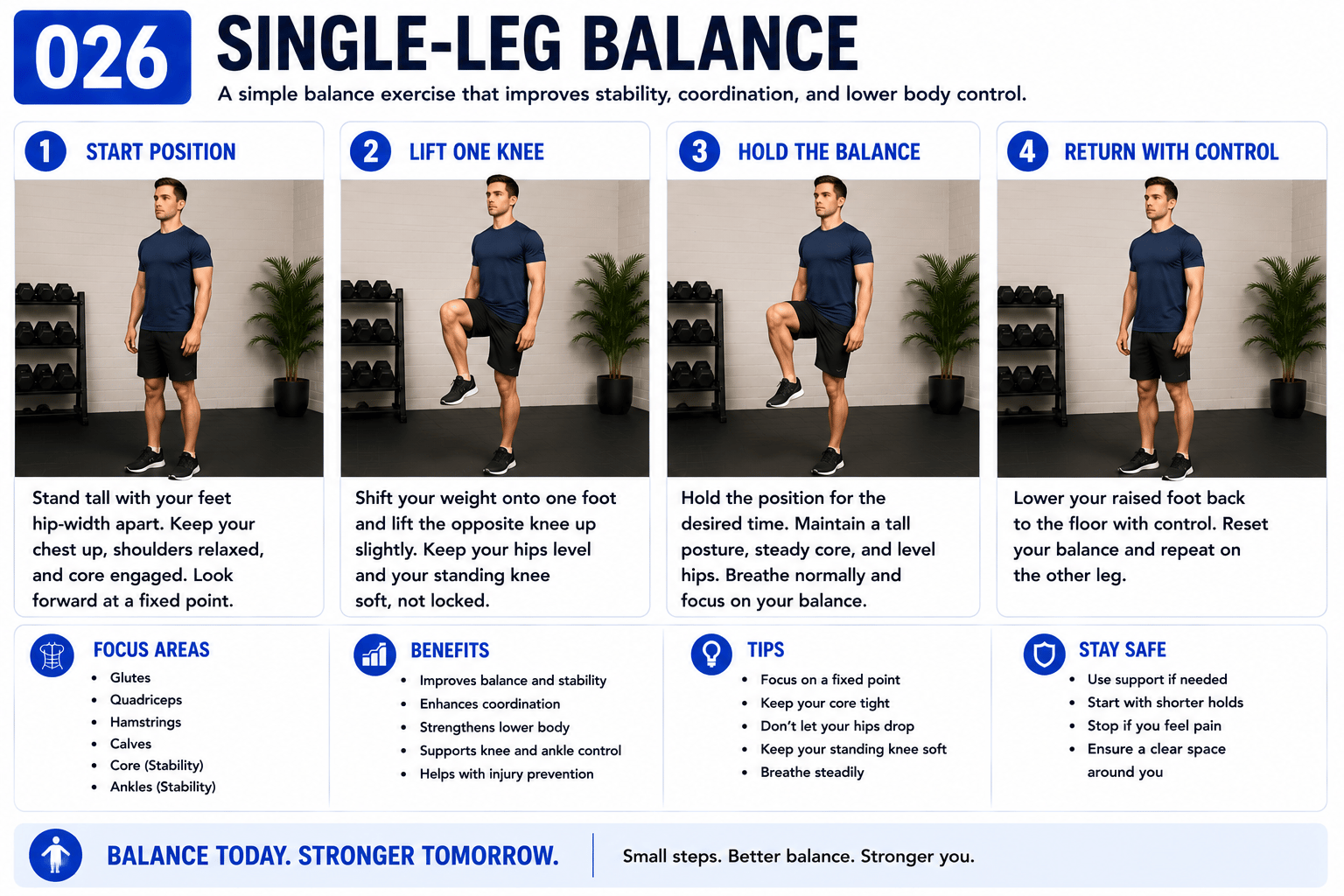
- Stand tall near a wall or counter you can touch for support.
- Fix your eyes on a still point at eye level.
- Shift your weight onto one foot and lift the other foot just off the floor.
- Keep the standing knee soft and your hips level — no leaning or hip-hiking.
- Hold steady for the set time, letting the small wobbles happen without panic.
- Lower the foot, rest, and switch sides.
Common mistakes
- Locking the standing knee straight.
- Letting the free-side hip drop instead of keeping the pelvis level.
- Staring at the floor — pick a point at eye level.
- Gripping the support the whole time instead of using it as a light spot.
Safety first
- Always practice within arm's reach of stable support.
- Make it harder gradually: fingertip support, then hands free, then eyes closed — only when each stage feels solid.
- If you are working on balance after an injury, or you experience frequent dizziness or falls, consult a licensed clinician for a program tailored to you.
Who should avoid or modify
- Recent ankle or knee injury without clearance — consult a licensed clinician first.
- Dizziness, vertigo or conditions affecting balance — practice only with sturdy support nearby and professional guidance.
- Reduced sensation in the feet (for example from neuropathy) — seek individualized advice before balance training.
Not medical advice
Rehab-style movements are general wellness exercises, not treatment. If you are recovering from an injury or surgery, are pregnant, or manage a chronic condition, consult a licensed clinician (physiotherapist or doctor) before performing them. Alblooshi Fit does not diagnose, treat, or cure any condition.
Stop immediately and seek medical help if you feel
- Sharp or stabbing pain (not normal muscle burn)
- Chest pain, pressure, or palpitations
- Dizziness, light-headedness, or fainting
- Numbness, tingling, or sudden weakness
- Severe shortness of breath
Breathing and tempo
Breathing: Breathe normally throughout — holding your breath makes balancing harder.
Tempo: Static hold; build from 15 seconds toward 60 per side.