Back to exercises
Calisthenics
Handstand Hold
A wall-assisted handstand hold that builds overhead strength, shoulder stability, balance and total-body tension. It is a calisthenics skill as much as an exercise: progress slowly, stay controlled, and step down before form breaks.
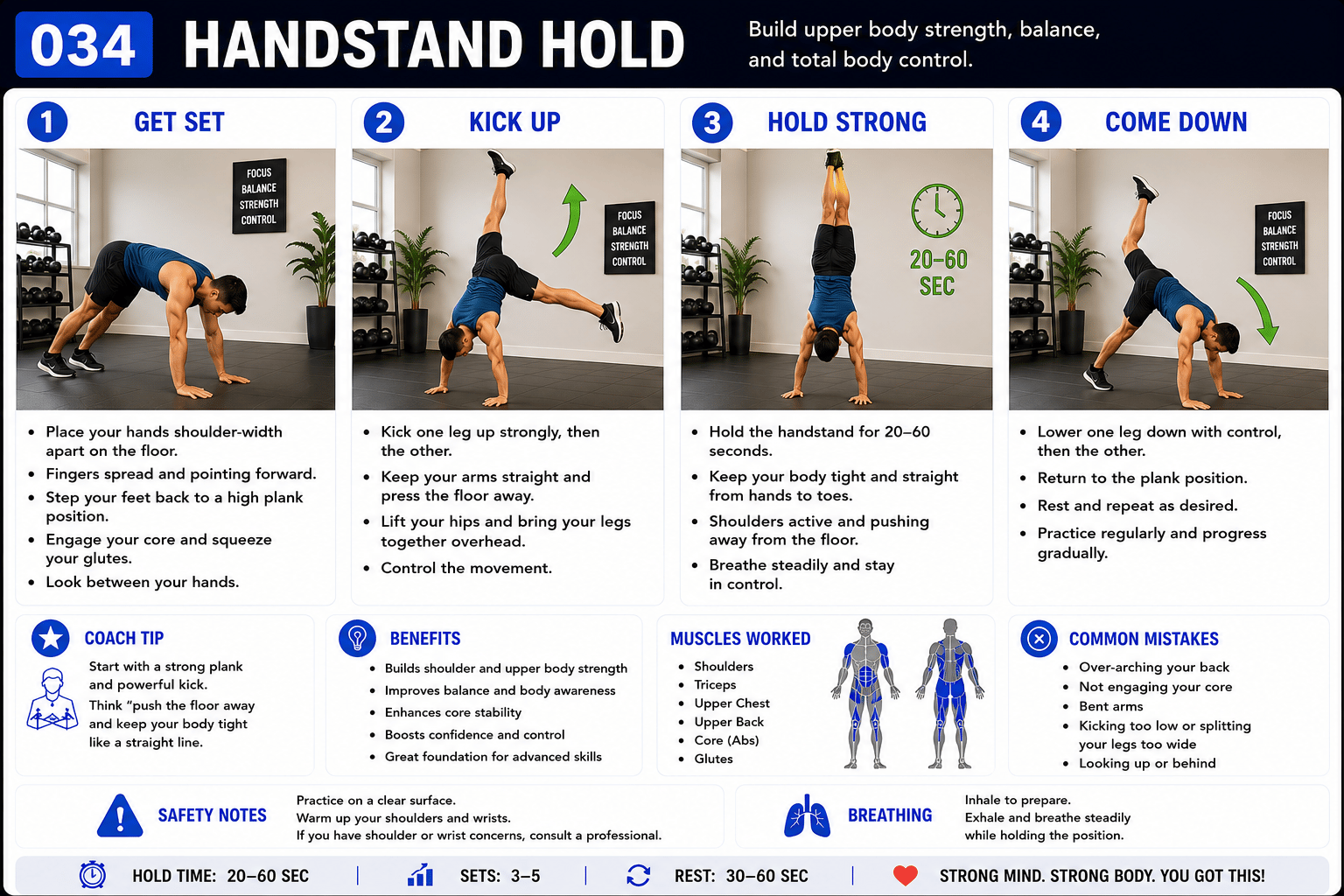
Photo guide
Alblooshi Fit
Media metadata
Provider: Alblooshi Fit atlas photo guide
Thumbnail: Photo guide
Reviewed video attachments can be managed from the admin panel. Alblooshi Fit does not scrape or re-host copyrighted exercise videos.
Suggested use
Sets
4
Time
20s
Rest
1m 30s
Calisthenics
Core
Balance
Advanced
Strength
Balance
Isometric
Muscles worked
Primary
Front delts
Triceps
Secondary
Traps
Serratus anterior
Forearms
Abs (rectus abdominis)
Glutes
Equipment
Yoga mat
Wall
How to do it
- Place your hands on the floor shoulder-width apart, fingers spread, about one foot from a sturdy wall.
- Kick one leg up at a time until both heels gently meet the wall.
- Push tall through your shoulders so your ears sit between your arms, not collapsed toward the floor.
- Squeeze your glutes, brace your trunk, and keep ribs pulled down so your body forms one long line.
- Look between your hands, breathe steadily, and keep pressure even through your palms and fingers.
- Step one foot down at a time before you lose shoulder position or start arching hard through the lower back.
Common mistakes
- Kicking too aggressively into the wall and losing control.
- Letting the shoulders sink instead of pushing the floor away.
- Overarching the lower back and flaring the ribs.
- Holding past the point where balance or wrist comfort breaks down.
- Trying freestanding handstands before wall holds are calm and repeatable.
Safety first
- Practice near a clear wall with space around you and step down early.
- Warm up wrists and shoulders first; keep holds short and high-quality.
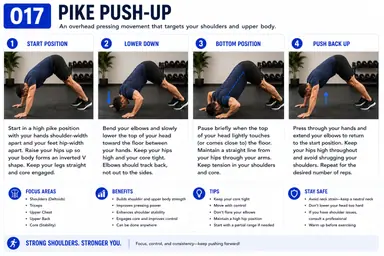
- Use pike push-ups and wall walks as preparation if kicking up feels uncontrolled.
Who should avoid or modify
- Recent wrist, elbow, shoulder, neck or back injury or surgery - consult a licensed clinician first.
- Conditions aggravated by inverted positions, such as uncontrolled blood pressure, dizziness or glaucoma - seek medical guidance before practicing.
- Stop immediately for sharp pain, numbness, chest pain, dizziness or severe shortness of breath.
Breathing and tempo
Breathing: Take small steady breaths behind a light brace; avoid holding your breath upside down.
Tempo: Hold for crisp sets rather than grinding long shaky holds.