Stretching
Half-Kneeling Hip Flexor Stretch
A half-kneeling stretch for the front of the hip — a favorite antidote to long days of sitting and a staple after leg day or runs. The secret is a gentle glute squeeze, not a bigger lunge.
Media metadata
Provider: Alblooshi Fit atlas photo guide
Thumbnail: Photo guide
Reviewed video attachments can be managed from the admin panel. Alblooshi Fit does not scrape or re-host copyrighted exercise videos.
Suggested use
Sets
2
Time
30s
Rest
15s
Muscles worked
Primary
Secondary
Equipment
No equipment needed - just your body.
How to do it
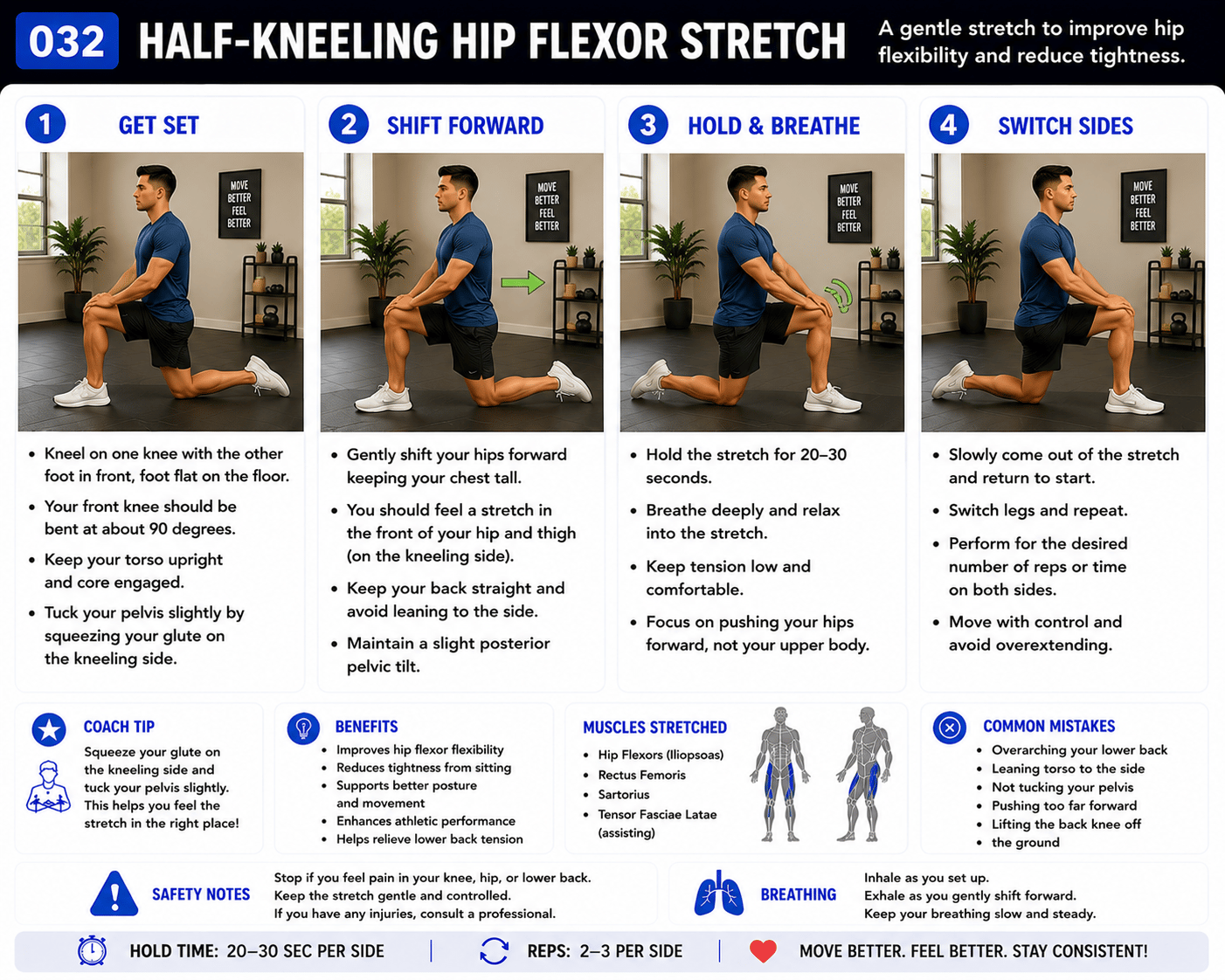
- Kneel on one knee with the other foot planted in front, both knees at roughly 90 degrees. Pad the down knee if needed.
- Stand tall through your torso and lightly tuck your pelvis, as if tipping your belt buckle toward your chin.
- Squeeze the glute of the kneeling-side leg — you should feel a stretch across the front of that hip.
- Shift your weight forward an inch or two only if you need more; the tuck and squeeze do most of the work.
- For extra reach, raise the same-side arm overhead and lean gently away.
- Hold, breathe, then switch sides.
Common mistakes
- Arching the lower back instead of stretching the hip.
- Lunging far forward and losing the pelvic tuck.
- Letting the front knee cave inward.
- Forgetting the glute squeeze, which is what targets the hip flexor.
Safety first
- Place a mat or cushion under the down knee.
- Work at mild tension — a pinching feeling in the front of the hip means back off.
- If kneeling is uncomfortable for your knee, try the stretch standing with the back foot elevated on a low step.
Who should avoid or modify
- Recent hip surgery or hip replacement — consult a licensed clinician about safe positions first.
- Knee pain that makes kneeling uncomfortable even with padding.
Not medical advice
Rehab-style movements are general wellness exercises, not treatment. If you are recovering from an injury or surgery, are pregnant, or manage a chronic condition, consult a licensed clinician (physiotherapist or doctor) before performing them. Alblooshi Fit does not diagnose, treat, or cure any condition.
Stop immediately and seek medical help if you feel
- Sharp or stabbing pain (not normal muscle burn)
- Chest pain, pressure, or palpitations
- Dizziness, light-headedness, or fainting
- Numbness, tingling, or sudden weakness
- Severe shortness of breath
Breathing and tempo
Breathing: Long, slow exhales as you settle into the stretch.