Back to exercises
Gym
Barbell Back Squat
The foundational barbell lift for lower-body strength. A bar across your upper back loads the squat pattern, building powerful quads, glutes and a resilient trunk.
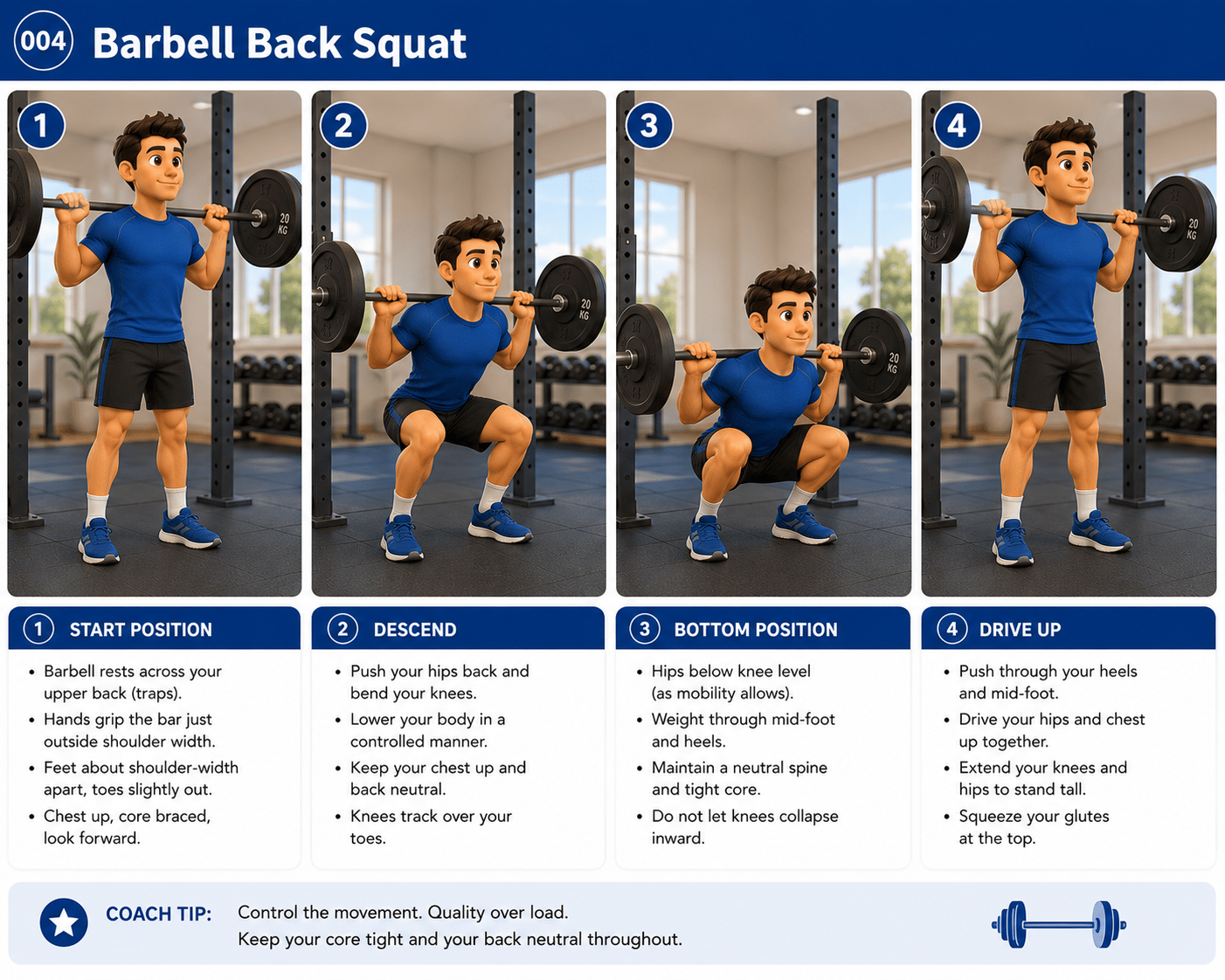
Photo guide
Alblooshi Fit
Media metadata
Provider: Alblooshi Fit atlas photo guide
Thumbnail: Photo guide
Reviewed video attachments can be managed from the admin panel. Alblooshi Fit does not scrape or re-host copyrighted exercise videos.
Suggested use
Sets
4
Reps
5-8
Rest
3m 00s
Gym
Intermediate
Strength
Hypertrophy
Squat
Muscles worked
Primary
Quads
Glutes
Secondary
Hamstrings
Adductors
Erector spinae
Abs (rectus abdominis)
Equipment
Barbell
Squat rack
How to do it
- Set the bar in the rack at upper-chest height and step under it, resting it across your upper traps.
- Grip the bar just outside shoulder width, squeeze your shoulder blades together, and stand up to unrack.
- Take two controlled steps back and set your feet shoulder-width apart, toes turned out slightly.
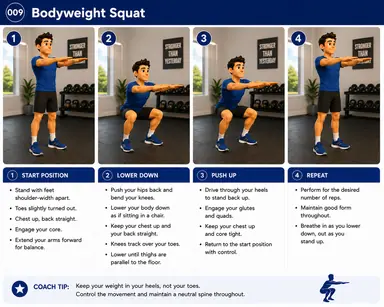
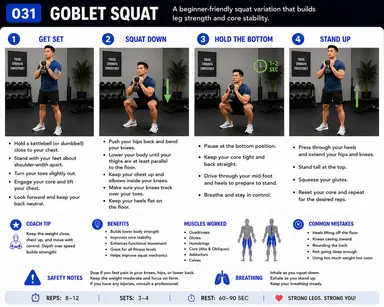
- Take a deep breath, brace your trunk, and sit down and back until your thighs reach at least parallel.
- Keep your whole foot planted and your knees tracking over your toes throughout.
- Drive up hard through mid-foot, exhaling past the sticking point, and stand tall.
- Re-brace at the top before every rep; walk the bar back into the rack when the set is done.
Common mistakes
- Letting the knees cave inward out of the bottom — actively push them out over your toes.
- Rising hips-first so the chest tips forward and the bar drifts over your toes.
- Cutting depth short as the weight gets heavy instead of reducing the load.
- Losing the brace mid-set — reset your breath and trunk before each rep.
- Looking up at the ceiling; keep a neutral neck with eyes fixed a few meters ahead.
Safety first
- Always squat inside a rack with the safety pins set just below your bottom position.
- Warm up with the empty bar and add weight gradually — earn each jump.
- If your heels lift, work on ankle mobility or elevate your heels slightly rather than forcing depth.
Who should avoid or modify
- Acute knee, hip or lower-back pain — consult a licensed clinician before loading the squat.
- Recent lower-body or spinal surgery (consult your clinician).
- Uncontrolled blood-pressure conditions — heavy braced lifting can spike blood pressure; check with your clinician first.
- Pregnancy — seek individualized guidance from a qualified professional before heavy barbell work.
Breathing and tempo
Breathing: Big inhale and full brace at the top; hold through the descent, exhale as you drive past the sticking point.
Tempo: 2-1-1 — two seconds down, brief pause in the hole, drive up with intent.